Coffee is not improvised.
Neither the price paid for it, nor the forest where it grows, nor the air that leaves the roaster, nor what goes into a dessert.
What a well-made coffee costs.
The price of commodity coffee is not set by the people who grow it. It is set by the New York exchange, and it changes every day.
We do not buy on that market. We pay our producers three times what commodity coffee pays, at an agreed price, for a simple reason: coffee with this level of care costs that, and whoever grows it well has to be able to make a living growing it well.
- Commodity coffee1×
- What we pay3×
Market reference: conventional versus specialty quintal in Ecuador (Anecafé, 2019). The multiple is ours and we back it with contracts.
- 3×over the commodity coffee price
- 100%traceable to the farm
Coffee that grows with the forest, not in its place.
Every year the world loses 130,000 hectares of forest to coffee. It is the figure almost nobody sees in their cup.
That is 3.8 times the area of the city of Guayaquil. Every year.
The farms we work with do the opposite: the coffee grows under the canopy, with the forest. 320 bird species have been recorded in the region's shade coffee — 48% of the threatened ones, 71% of the endemic ones and 90% of the migratory ones.
In full sun it is lost: bird abundance falls by 30% and diversity by 15% compared with a shaded farm (Smithsonian Migratory Bird Center).
Those birds return the favour: they control the pests that other crops fight with chemicals. Zero deforestation. Not as a goal: as a condition for buying from them.
A roast that does not dirty what you cannot see.
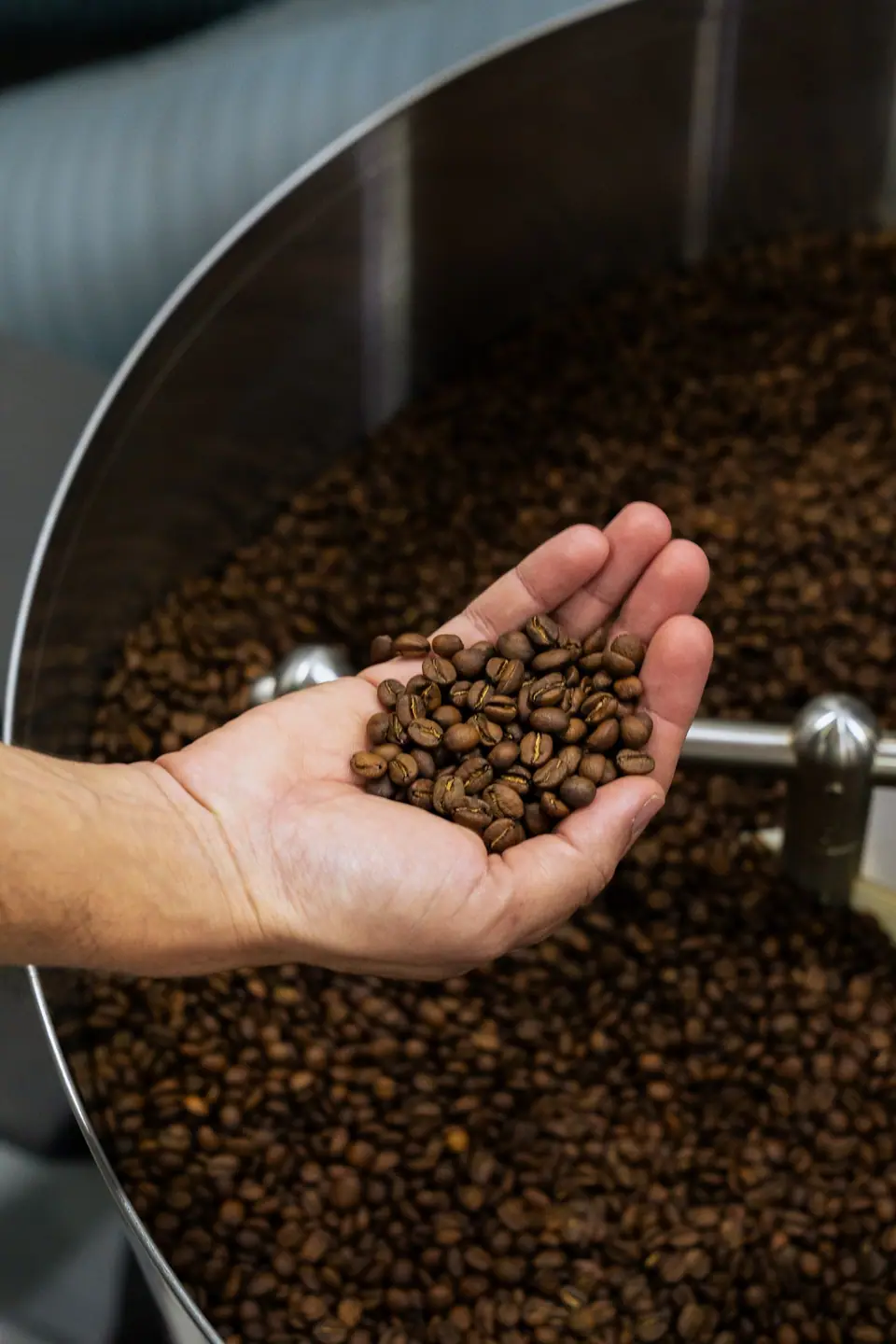
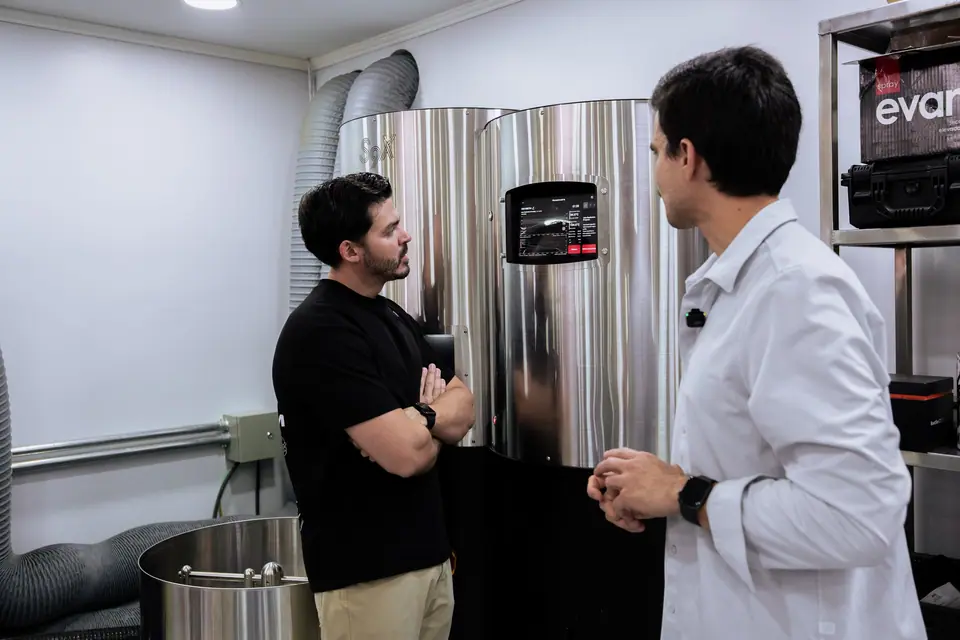
Roasting coffee releases smoke and compounds into the air. At the roastery where our coffee is roasted, that air is filtered before it leaves: no pollutants are released into the environment.
The roast is not simply handed over. A partner roaster roasts the beans with us inside the process: we choose the profile and supervise every batch. And it is not one single roast — it is roasted differently for espresso and for filter, because they do not ask for the same thing. From mill to cup, every lot goes through a long process of care.
Sustainability is also what happens to your body.
In Ecuador, 6 out of 10 adults live with overweight or obesity, and 7 out of 100 already have elevated blood glucose or are being treated for diabetes. Added sugar sits at the centre of that problem — and traditional pastry is built on it.
We took it out of the formula. Our pastry is sweetened with allulose: a rare sugar that exists in nature, tastes like sugar, caramelises like sugar — and carries less than 10% of its calories, without spiking blood glucose.
- Sugar4 kcal
- Allulose0.4 kcal
- Does not spike blood glucose
- Caramelises like sugar
- Does not cause cavities
This is not the «light» version of a dessert. It is the dessert rethought from the formula, high in protein and with no added sugar. We have been doing it since 2017, before it was a trend.
Taking care of yourself and enjoying yourself are the same thing.
Do you want this standard at your company?
Coffee breaks and catering with the same coffee and the same formula.
Where does PROT INN's coffee come from?
From Ecuadorian farms we buy from at an agreed price, not at exchange price, with traceability to the farm. The coffee grows under shade, with the forest, and zero deforestation is a condition for buying from them.
Why doesn't PROT INN use added sugar?
Because in Ecuador 6 out of 10 adults live with overweight or obesity and added sugar sits at the centre of that problem. Our pastry has been sweetened with allulose since 2017.
What is allulose?
A rare sugar that exists in nature. It tastes and caramelises like sugar, carries less than 10% of its calories and does not spike blood glucose. It does not cause cavities either.
Does PROT INN do catering and coffee breaks for companies?
Yes, with the same coffee and the same formula as the menu. Write to [email protected] or use the form on this page.
Where the figures come from
The context figures are public and linked. Ours — the multiple we pay, the traceability, the filtered air and the zero deforestation — we stand behind ourselves.
- Coffee Barometer 2023 — 130.000 ha/año
- Cenicafé · Botero et al. 2014 — 320 especies de aves en cafetales con sombra
- Smithsonian Migratory Bird Center — sombra frente a pleno sol
- Anecafé vía Primicias — quintal convencional y de especialidad en Ecuador (2019)
- Encuesta STEPS Ecuador 2018 — MSP / INEC / OPS-OMS
- Cleveland Clinic — alulosa: calorías, glucosa y caries